

And the latest technology that’s fixing it.
February 2, 2026 - As American Heart Month kicks off, a surprising new trend is emerging: Atrial Fibrillation (AFib) is no longer a condition reserved for the elderly. As cases are rising among younger, active adults. El Camino Health finds breakthrough treatment technology is the go-to approach to get the heart back in rhythm, reduce the risk of stroke, and offer a solution for a generation that isn’t interested in slowing down.
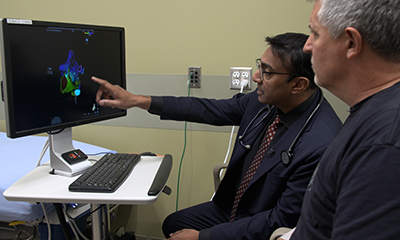
"I've seen patients in their twenties that have AFib. That's an exception," says Dr. David Singh, cardiac electrophysiologist at El Camino Health in Mountain View, California. "But as we get older, the risk of AFib increases, and it's a progressive disease. The more advanced it is, the harder it is to treat. If we intervene earlier on in their disease course, we have a much better chance of success."
This February, Dr. David Singh and patient Jerry Veggian are celebrating a medical milestone. Three months ago, Jerry would wake in the night from his irregular heartbeat. It would keep him up, sometimes four to five hours at a time, and he worried about having a stroke.

Using the newly pioneered Pulse Field Ablation (PFA), doctors at El Camino Health can now "reset" a racing heart with pinpoint precision. It’s a game-changer for the millions of Americans like Jerry, living with AFib. Three months after his procedure, Jerry and his doctor say the message is clear: the sooner you seek help, the faster you get your life back.
What is Atrial Fibrillation?
Atrial Fibrillation is the most common type of irregular heartbeat. According to the American Heart Association, it affects about five million Americans and the number is growing. The Centers for Disease Control And Prevention estimates it will affect 12 million Americans by 2030. AFib incidences are rising in people in their 30s, 40s, and 50s due to a rise in lifestyle risk factors, better detection and diagnosis tools and the aging population.
Lifestyle Risk Factors
While the irregular and often rapid heart rhythm of AFib is traditionally associated with the elderly, physicians are seeing a spike in younger patients due to factors ranging from sleep apnea to high stress or anxiety, and these other lifestyle risk factors include:
- Obesity and diabetes
- High blood pressure
- Smoking
- Alcohol and caffeine use
- Intense endurance sports
The incidents of AFib also increase with age.
At 60, Jerry was an active outdoorsman who enjoyed dirt bikes, mountain biking, wakeboarding, knee boarding, snowmobiles, and more. His active lifestyle was interrupted by an irregular heartbeat.
Warning Signs You May Have AFib
The danger of AFib lies in its subtlety. Left untreated, it can increase the risk of stroke by fivefold. El Camino Health urges people of all ages in the community to look for these "red flag" symptoms:
- Heart palpitations: A feeling like your heart is "flipping," racing, or skipping a beat.
- Unexplained fatigue: Feeling exhausted even after a full night's rest.
- Shortness of breath: Difficulty breathing during light exercise or even while resting.
According to the Heart Rhythm Society, AFib causes one in four strokes. Untreated, it has also been linked to heart failure, sudden cardiac arrest and cognitive issues like dementia.
Some people can have AFib with no obvious symptoms, highlighting the importance of an annual physical exam where a doctor may pick up the condition. Early diagnosis and treatment increase a person’s longevity and quality of life.
Advanced Treatment Technology
Today, the leading treatment for symptomatic AFib is Ablation, a minimally invasive procedure to inactivate abnormal tissue causing the irregular heartbeat. Until recently, ablation involved "burning" or "freezing" the disruptive heart tissue. Today at El Camino Health, Dr. Singh is utilizing Pulse Field Ablation, a non-thermal breakthrough without adverse effects of conventional thermal ablation.
"Ablation has a long and established track record in atrial fibrillation. And the technology just keeps getting better and better," says Dr. Singh. "Today, the first line therapy for someone with atrial fibrillation if they have symptoms, is pulse field ablation. It's simply the best tool that we have to ablate this rhythm."
The U.S. Food and Drug Administration approved devices for Pulse Field Ablation in December of 2023. El Camino Health and Dr. Singh are among the early adopters of the technology.
"Delivering high energy to a very discreet area in a short duration is very predictable. In the past the technologies took more work to inactivate the areas, with the ablation signal or the pulse, it's gone," says Dr. Singh. "I'm still wowed by this when I see it in the lab because it's predictable, it's a lot faster. That means patients are under anesthesia for a lot less time, and we think it's safer than technologies in the past. The difference between being under anesthesia for three hours and maybe being under for 45 minutes is huge."
Jerry went home from his procedure the same afternoon. He says he had no pain and minor discomfort at the incision, he rested and was up and walking the next day.
An Effective Outcome: Return to an Active Lifestyle
At the three-month mark since his procedure, Jerry says he’s 100%. He hasn't missed a beat. He has done some motorcycle riding. And when the weather is right, he'll be back on his mountain bike on the forest trails. To anyone diagnosed with AFib, Jerry wants them to know that it won’t get better on its own.
Jerry Veggian is a believer in his doctor and the latest technology, "Go do it right away. I wish I had done it sooner."
To learn more about the latest in prevention, treatment and everyday strategies to protect their heart, people can join El Camino Health's 15th Annual Heart Forum on February 7, 2026. The in-person registration is full but there are still online seats available and people can register here for this free educational forum.
Digital Assets Available for Media:
- Video Interviews and B-roll footage of Dr. David Singh and his patient Jerry Veggian; doctor and patient in clinic; Jerry’s outdoor adventure video.
- High-res photos of Dr. David Singh and his patient Jerry Veggian; before and after Pulse Ablation for AFib.
- Blog: "The Latest Technology in AFib Treatment" by Dr. David Singh.
About El Camino Health
El Camino Health has served the communities of Silicon Valley and the South Bay for more than 60 years, with nationally recognized physicians and nurses at two not-for-profit acute care hospitals in Los Gatos and Mountain View, and 26 care locations across the region, which includes primary care, multi-specialty care, and urgent care. El Camino Health is dedicated to giving patients high-quality care utilizing the most advanced technology and research. As your healthcare partner of choice, we focus on keeping you healthy and getting you back on your feet when you need it, so you can live your best life.
Key Services Include:
- Cancer care
- Cardiovascular care
- Maternity care
- Mental health and addiction services
- Orthopedics
- Pulmonology
- Urology
Women's health Awards & Achievements:
- Named one of the World's Best Hospitals 2025 by Newsweek
- Best Hospitals for Maternity Care by U.S. News & World Report
- San Francisco Bay Area's first Magnet hospital for nursing excellence
To learn more about career opportunities for nurses, please visit elcaminohealth.org.
###


