

New technology and techniques allow Gen X and Millennials to bypass decades of arthritis pain and mobility limits.
LOS GATOS, Calif. (June 3, 2026) – Younger, highly active people suffering from earlier-onset arthritis from sports injuries, genetics or trauma can now reclaim their active lifestyle with new forever joints. A combination of advanced materials, precision, and digital tools allows highly-trained surgeons at El Camino Health to optimize alignment creating replacement joints built to last a lifetime.
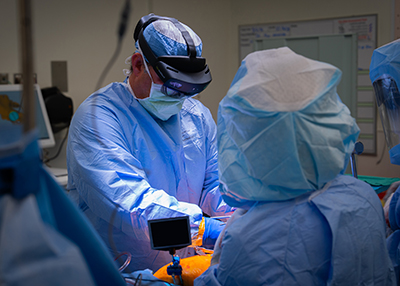
"We used to think the average age of a total knee or a total hip candidate is the mid-70s or 80s. My average patient age is the 60s or late 50s now," says Dr. Matt Miller, a board-certified, fellowship-trained orthopedic surgeon at El Camino Health. "That is because of our commitment to an active lifestyle. Folks just don't tolerate being inactive anymore, which is good, and our implants have gotten much better."
Scott Schreiman is a former paratrooper whose work as an entrepreneur in tech put him in a sedentary lifestyle. At age 50, he worked to get in shape and set a goal of completing an Ironman, a grueling, long-distance triathlon before he turned 55. After achieving the goal, Schreiman said he could hardly walk. All the intense training took a toll and he needed a hip replacement.
With confidence in modern joint materials, precision technology and his own experience, Dr. Miller replaced Schreiman's hip, giving him back mobility, the ability to stay active and remain healthier overall.
What are hip and knee replacements made of?
Old metal-on-metal implants have been replaced by the latest generation plastics, high performance polymers and in some cases ceramics, all to mirror human bone and reduce wear. Coatings can minimize long-term degradation or reduce bacterial growth.
What's the most advanced surgery?
The orthopedic surgeons use precise digitized techniques to optimize alignment of the new joint. Dr. Miller uses robotic assistance to map the specific structure unique to each patient before surgery even begins. Mixed-reality goggles help him see "the map" overlaying the patient's anatomy during surgery. Data captured during the procedure is then used to customize the patient's recovery plan.
"I'm still performing every step of the surgery, but I have real-time guidance to confirm the plan is being executed exactly as intended," says Dr. Miller. "Each person's size and alignment, all of that is very personalized."
For example, if a patient has a back problem, Dr. Miller says he cannot place a hip implant in a textbook alignment because he has to make adjustments to how the spine is moving relative to the pelvis in that specific person.
How long will a new joint last?
Research published by the National Center for Biotechnology Information in 2026 found contemporary hip replacements are lasting longer than ever:
- Nearly 94% lasted 20 years
- A total of 92.8% lasted 25 years
- Approximately 92% lasted 30 years
Knees are a more complex joint with a different hinge. While extremely durable, more moving parts and how they are used can affect how long the replacement lasts. The American Joint Replacement Registry is maintained by the American Academy of Orthopedic Surgeons. A study published in the Journal of Arthroplasty shows the length of time a knee replacement lasts has dramatically increased as metal joints were replaced with devices made from modern plastics:
- From 90 to 94% lasted 20 years
- From 82 to 85% lasted 25 years
- About 70 to 75% lasted 30 years

"I can say with pretty good confidence that if you have a hip or knee replacement now, even if you're very young, you can count on it lasting the rest of your life," Dr. Miller says.
Dr. Miller recommends patients plan for six weeks of focused recovery with physical therapy, though feeling truly "normal" can take a few months.
As for Schreiman, at one year post-op, he ran a marathon saying, "My surgical leg actually works better mechanically than my other leg now."
About El Camino Health
El Camino Health has served the communities of Silicon Valley and the South Bay for more than 60 years, with nationally recognized physicians and nurses at two not-for-profit acute care hospitals in Los Gatos and Mountain View, and 28 care locations across the region, which includes primary care, multi-specialty care, and urgent care. El Camino Health is dedicated to giving patients high-quality care utilizing the most advanced technology and research. As your healthcare partner of choice, we focus on keeping you healthy and getting you back on your feet when you need it, so you can live your best life.
Key Services Include:
- Cancer care
- Cardiovascular care
- Maternity care
- Mental health and addiction services
- Orthopedics
- Pulmonology
- Urology
- Women's Health
Awards & Achievements:
- Named one of the World's Best Hospitals 2026 by Newsweek
- Best Hospitals for Maternity Care by U.S. News & World Report
- San Francisco Bay Area's first Magnet hospital for nursing excellence
- Among fewer than 2% of hospitals nationwide to receive Five Magnet Designations
To learn more, visit elcaminohealth.org.


