

How a Silicon Valley Medical Advancement is Restoring Quality of Life for Millions
April 8, 2026 - People are now discussing menopause in an open, unapologetic way. Yet one related condition remains shrouded in secret, even shame: pelvic organ prolapse (POP). One third of women experience urinary incontinence, and one third of women experience pelvic prolapse. An El Camino Health breakthrough in robotic-assisted pelvic floor reconstruction, often combined with a procedure to address incontinence, transforms women's lives in just a few hours.
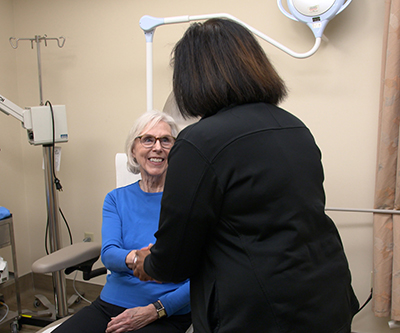
"Stress incontinence is related to the physical stress of pressure, when you cough, when you sneeze, when you jump, when you laugh. With that pressure transmission, that front wall of the vagina has to support the urethra. If it doesn't, people leak," says Dr. Savitha Krishnana, a urogynecologist at El Camino Health. "Women come into our office, and they're almost mad to hear that we have great options for them because they've lived with such a poor quality of life for so long."
Dr. Krishnan is dismantling the idea that living with incontinence is a part of aging. Using the latest robotic technology, Dr. Krishnan performs pelvic floor reconstructions with such precision that the procedure can be completed in half the time of traditional surgeries. This means less time under anesthesia and a faster, safer return to a better daily life.
What is Pelvic Organ Prolapse (POP)?
POP occurs when pelvic muscles and connective tissues weaken, causing organs like the bladder or uterus to drop and bulge into the vagina. While common, it is often misdiagnosed or ignored.
- What causes prolapse? Childbirth, aging, menopause, and chronic strain.
- What are the symptoms of prolapse? A feeling of heaviness, a visible bulge, discomfort during intimacy, or persistent urine leakage.
- What will the doctor do? First, assess that the problem is properly diagnosed. Symptoms of prolapse can mimic other issues like UTIs or endometriosis, making a professional evaluation essential. If you are experiencing prolapse, there is a range of options from physical therapy to the minimally invasive reconstruction.
Prolapse Forces a “Mapping” Lifestyle
For many women, prolapse means an exhausting mental exercise of planning every outing around the nearest restroom. Jane lives in wine country in Northern California, and it meant giving up her active lifestyle.
"I started to have leakage, urine leakage. Not very much, but I thought, 'Well, is this normal?'," said Jane. "You're going to the bathroom a lot. Sometimes you have to wear a diaper. That was awful for me. I thought it was just a part of getting older."
The Tech Behind the Transformation
The most conservative approach to treatment is Kegel exercises, which involve clench-and-release movements that strengthen the pelvic floor.
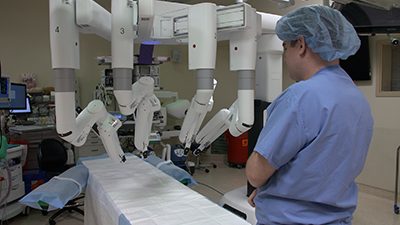
"If you look at the data at a year out, only 10 to 15% of people are still compliant with physical therapy," says Dr. Krishnan. "So not only is it cost ineffective, it may be a patient turnoff."
While presenting a range of options based on a woman's individual symptoms, Dr. Krishnan places a vaginal sling in many patients, acting as a supportive hammock to reinforce weakened muscles, and says the data shows the long-term success rate of the minimally invasive, outpatient surgery is 89% - 94%.
At El Camino Health, the shift in treatment is dramatic. What used to be a five-hour surgery and a week-long hospital stay is now a precision procedure done in half the time, and the patient is at home the same day. The millimetric precision of robotic arms allow for tiny incisions, reducing pain and preserving healthy tissue.
"A surgical robot is just cold steel until it’s guided by a surgeon who knows the patient's fears and their plans for the future," says Dr. Krishnan, who is now teaching surgeons across the country how to perform the robotic surgery accurately and efficiently.
Quality of Life
"We are seeing a cultural shift in 2026," says Dr. Krishnan. "Women are no longer willing to trade their quality of life. We aren't just fixing anatomy; we're returning a woman's social life and her freedom."
Today, Jane is once again living a very active life with her grandchildren.
"In one day, a few hours in the surgery was able to fix everything. I went home that night, and it's been wonderful," says Jane. "Having a pelvic prolapse is not a life-threatening situation. It's not a life-threatening disease. So Dr. Krishnan didn't save my life, but she saved the quality of my life, and every woman deserves that."
About El Camino Health
El Camino Health has served the communities of Silicon Valley and the South Bay for more than 60 years, with nationally recognized physicians and nurses at two not-for-profit acute care hospitals in Los Gatos and Mountain View, and 28 care locations across the region, which includes primary care, multi-specialty care, and urgent care. El Camino Health is dedicated to giving patients high-quality care utilizing the most advanced technology and research. As your healthcare partner of choice, we focus on keeping you healthy and getting you back on your feet when you need it, so you can live your best life.
Key Services Include:
- Cancer care
- Cardiovascular care
- Maternity care
- Mental health and addiction services
- Orthopedics
- Pulmonology
- Urology
- Women's health
Women's health Awards & Achievements:
- Named one of the World's Best Hospitals 2026 by Newsweek
- Best Hospitals for Maternity Care by U.S. News & World Report
- San Francisco Bay Area's first Magnet hospital for nursing excellence
- Among fewer than 2% of hospitals nationwide to receive Five Magnet designations
To learn more, visit elcaminohealth.org.
###


